Hi, this is the commercial projects page, where I hope to show as much of what I’ve done as possible.
2026-present: commercial microwave repair:
Previously, I had repaired a few commercial microwaves as a test to see if it had any financial viability. I had repaired a Buffalo and two Sharps and had those sold. Unfortunately, I did not take any photos of those.
First documented(ish) repair: a Samsung CM1929:
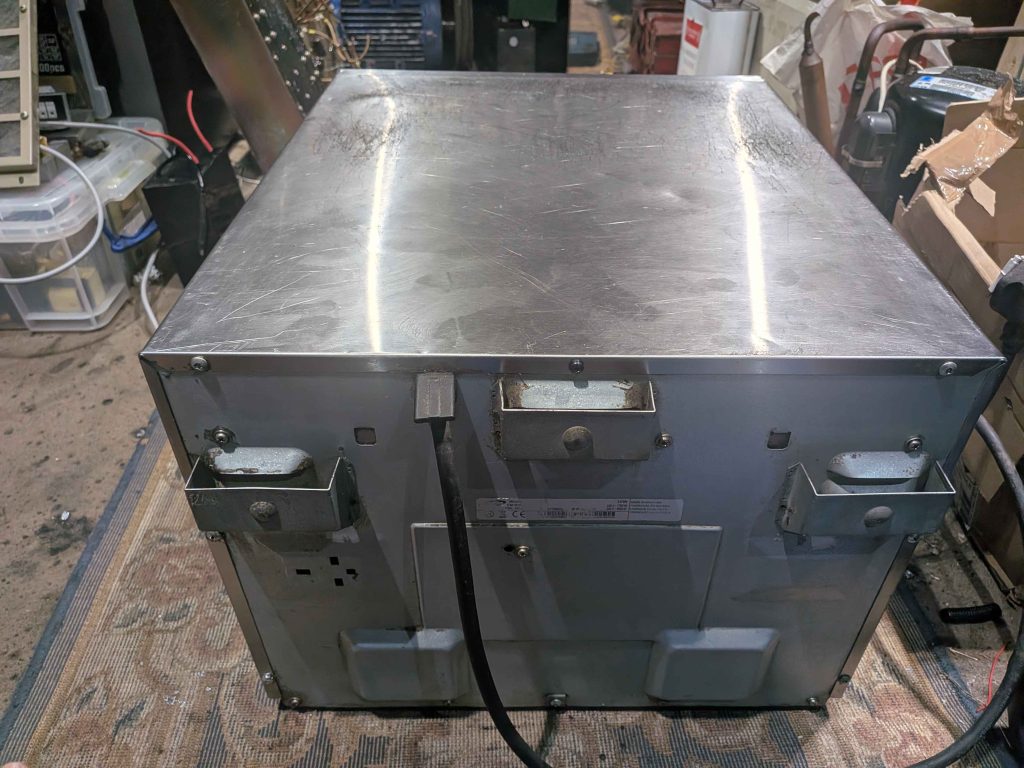
I had acquired a pair of these sold as not working. I did not document the first of the pair sadly, but it had mostly the same issues as this one. I quickly found out the issue to be with both high voltage capacitors, which had leaked some of their oil and had shorted internally, blowing the HV fuses and one of the main input fuses.
Two capacitors, as the CM1929 is a dual magnetron design, in this case having two individual HV circuits with their own transformer, capacitor, diode, HV fuse and magnetron.
‘Repair’ had been conducted in the past, evidently, as one of the HV fuses had been replaced with a jumper. Sadly for them, a jumper will not fix a shorted capacitor.
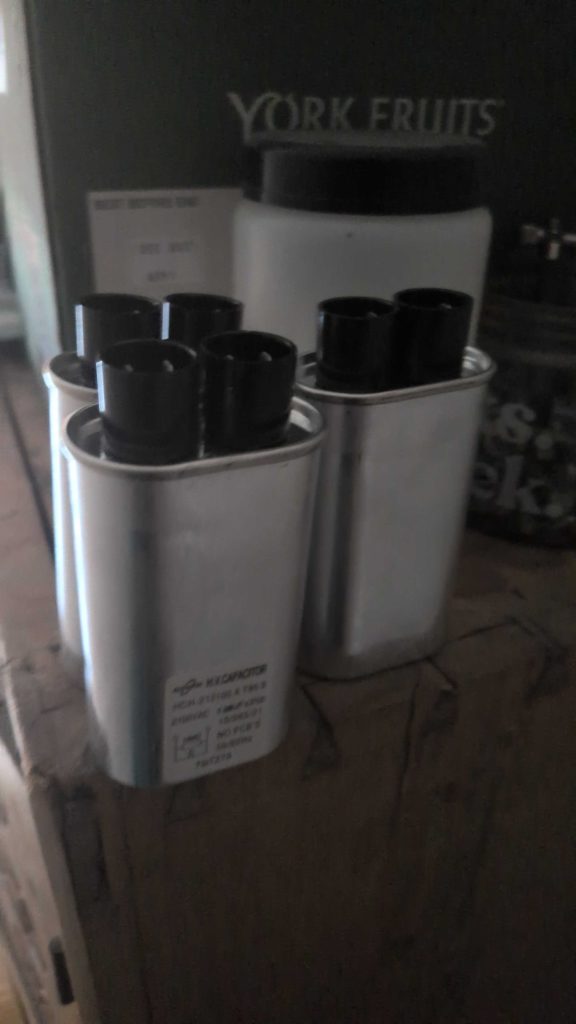
Replacement capacitors, HV fuses and main fuses were bought off of AliExpress.
After replacing the capacitors and fuses, the microwave was in working order. There were a couple more issues to rectify:
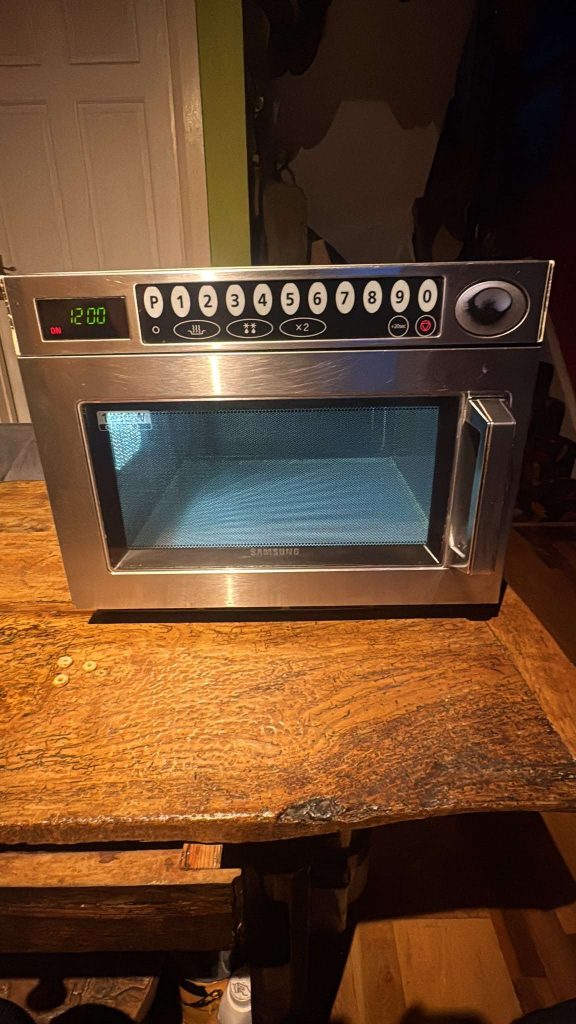
The original lights (not shown in image) were completely caked in grease and had to be replaced. I bought the replacement lights off of AliExpress (shown in image). These were of the LED kind and had an oddly cold colour temperature, perhaps around 8000K.
Lastly, the door switches were temperamental. The switches in this particular model consist of two sets of microswitches, with one set relying on the force of the switch to push it open, disconnecting the HV transformers from mains electricity. This one set often got stuck after opening the door. Not a particularly great design. Thankfully not too much of a safety concern as the other microswitch was in fully working order. Not an eyeball microwaver.
I initially tried adding a spacer to the problematic switch assembly, which meant both the switches would actuate at the same time.
For some reason, this led to the microwave shorting its mains input upon closing the door, tripping the breaker. I am still unsure as to why this happened, but I now have a fear of closing commercial microwave doors.
After meticulous greasing and sanding to reduce friction on the assembly, I eventually got them to work. (A pain.)
The Samsung had been tamed, and was eventually sold. Yay!
- update: I have recently repaired a Panasonic microwave and after searching online for a technician’s datasheet, I found out these microwaves use what’s known as ‘short switches’. These are designed to introduce a complete short on the mains input if the door switch mechanism encounters problems (e.g. sticky switches).
The Panasonic in question:
(Stock photo)
This one had an issue with the door switches (typical). Customer’s problem was it was blowing its fuse all the time.
The door switch mechanism was caked in grease, meaning the switches would not actuate at their intended times whenever the door was closed or opened. In some cases, the short switches would short the mains input, blowing its fuse.
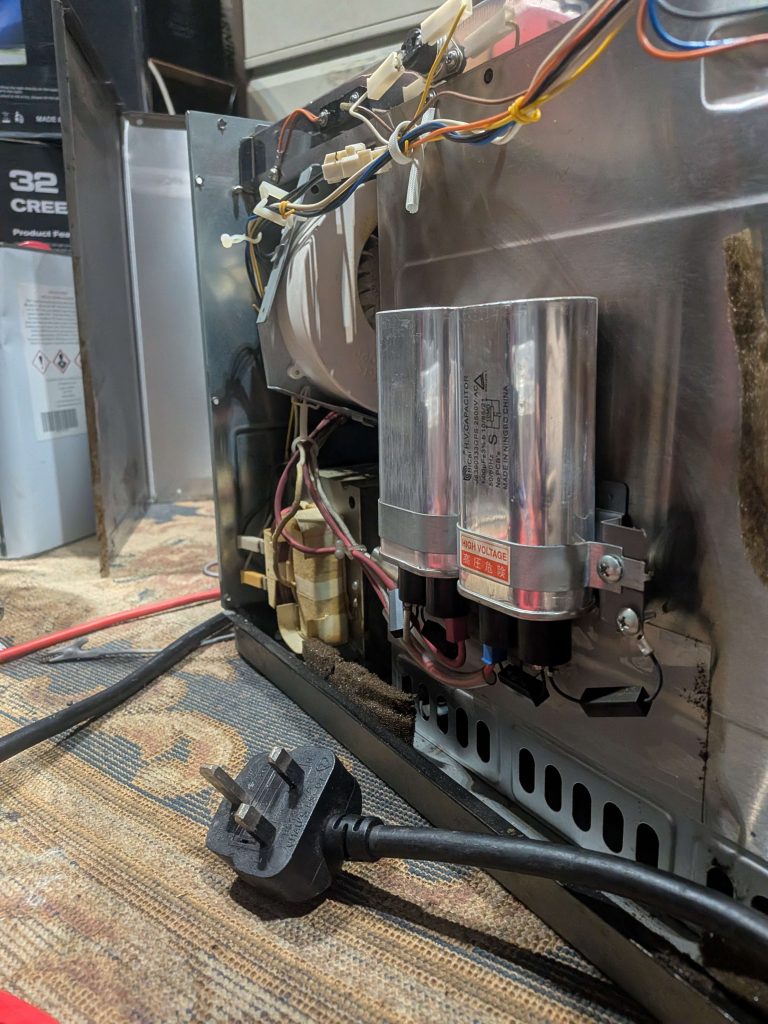
Probably the prettiest microwave capacitors I’ve seen so far. Panasonic knows their stuff.
The CM1856 also used waveguides on the top and bottom of the cooking cavity, which is a different departure to the typical pair on top.
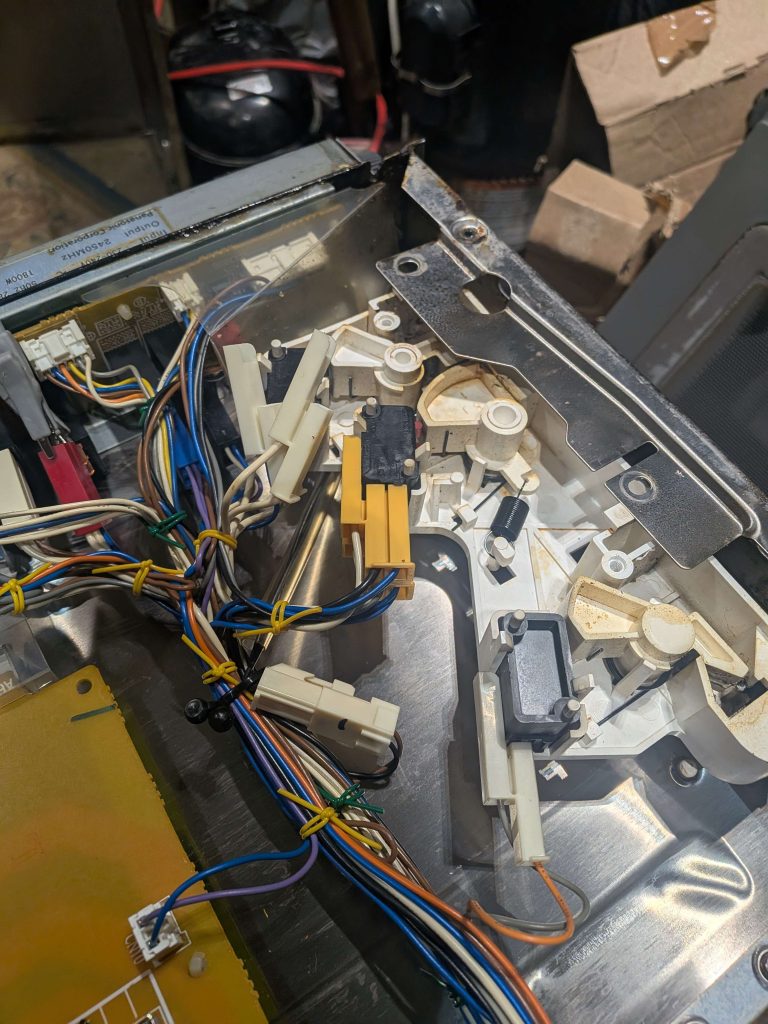
The door switch assembly beforehand. Quite greasy.
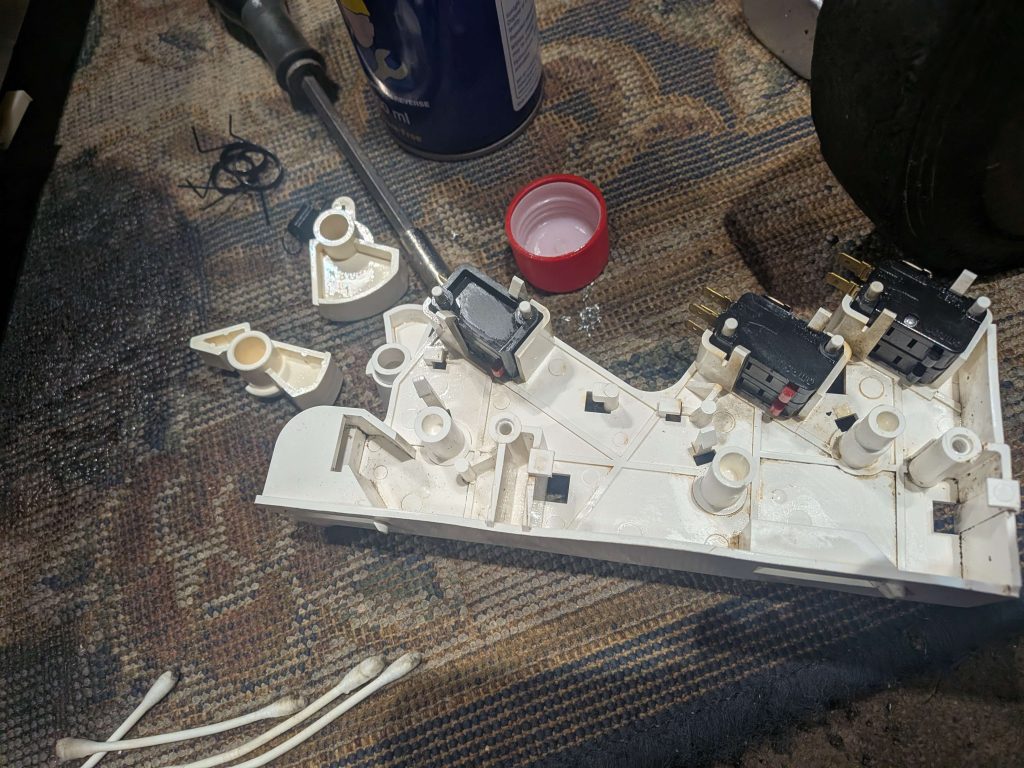
Giving it a good clean with WD40, ethanol and my trusty cotton buds.
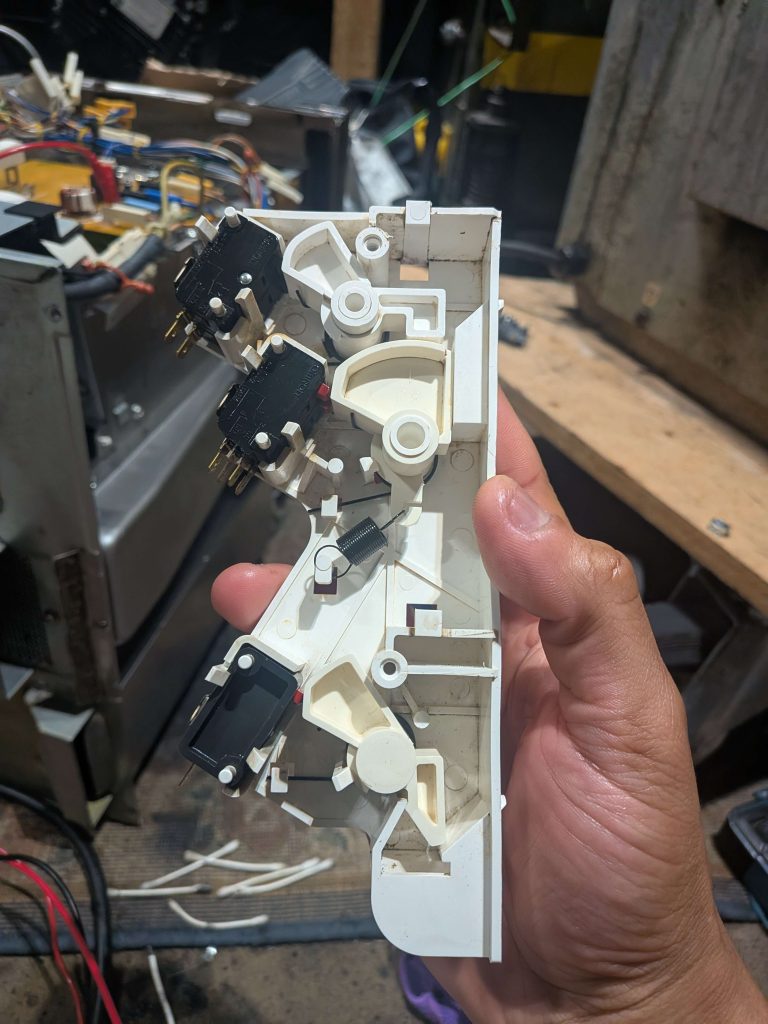
Looking much better.
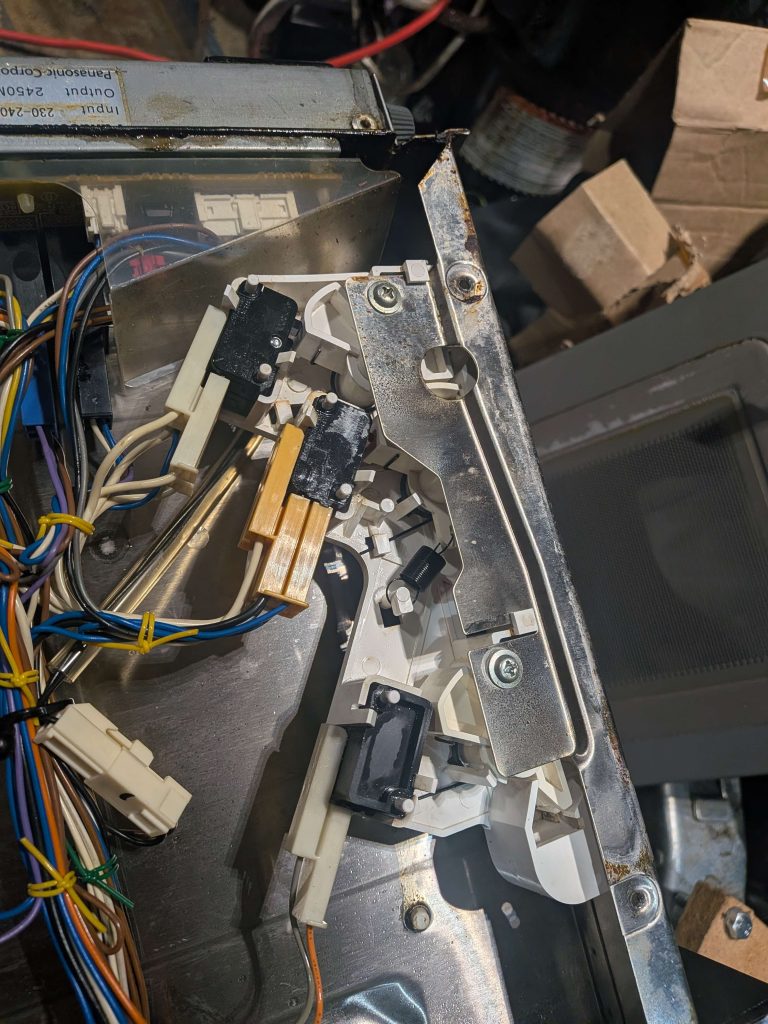
Lovely jubbly.